Global Monitoring Nodes
Real-time uptime monitoring for everyone
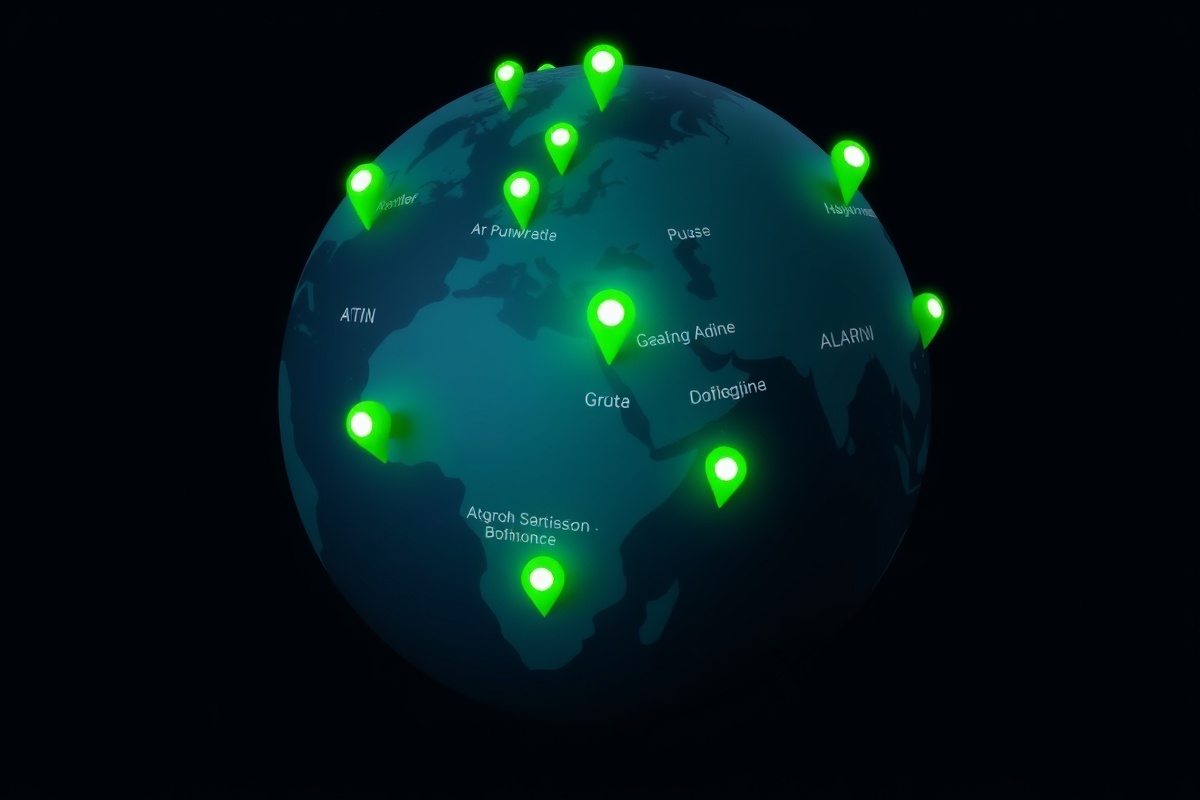
Monitoring from 52 Locations Worldwide
SitePulse runs uptime checks from 52 independent monitoring nodes distributed across six continents. Each node performs HTTP, HTTPS, DNS, TCP, and SSL certificate checks every 60 seconds — giving you a true global picture of your service availability, not just what one data center in Virginia can see.
When a user in São Paulo reports your checkout page is slow, a single-node monitor in Frankfurt might still report 100% uptime. That gap is where false negatives hide. Our multi-node architecture eliminates blind spots by measuring response times, status codes, and SSL validity from the exact regions your customers operate in. If three nodes in the Asia-Pacific tier detect degraded performance while Europe remains nominal, you receive a regional degradation alert — not a blanket outage or a missed incident.
Each node is hosted in a carrier-neutral facility with redundant power, diverse upstream routes, and dedicated monitoring bandwidth. Nodes are geographically isolated: a fiber cut in Chicago does not affect the Toronto or Dallas checkers. This independence means your uptime reports reflect real-world conditions, not shared infrastructure failures.
Why Multi-Node Monitoring Matters
Cross-Node Consensus Engine
A single timeout doesn't trigger an alert. SitePulse requires at least two independent nodes in the same region to confirm a failure before dispatching notifications. This consensus model cuts false-positive alerts by an estimated 94% compared to single-node checkers, so your on-call team responds to real incidents only.
Per-Region Performance Tracking
Each monitoring node maintains a rolling 30-day latency baseline for every monitored endpoint. When response time from the Singapore node (node ID: AP-SIN-04) drifts beyond two standard deviations — for example, jumping from an average of 87 ms to 312 ms — you receive a performance degradation alert even if the endpoint still returns HTTP 200. Early warning before users complain.
Regional Outage Detection
SitePulse groups nodes into regional tiers: North America (14 nodes), Europe (12 nodes), Asia-Pacific (13 nodes), South America (5 nodes), Africa (4 nodes), and Oceania (4 nodes). Alerts specify which tier is affected, so your incident response is targeted. A BGP announcement affecting only the Southern Cone triggers a South America alert, not a global page.
SSL/TLS Monitoring from Every Region
Certificate validation is performed independently by every node. Because some regions route through different CDN edges or anycast nodes, certificate errors can be geo-specific. SitePulse flags region-bound SSL issues — such as a misconfigured edge cache in Tokyo serving an expired cert — so you can remediate before a wider audience is impacted.
Per-Region Uptime Percentages
Your monthly SLA report breaks availability down by region. If your North America uptime is 99.997% but Asia-Pacific sits at 99.812%, you have the data to justify additional edge capacity in Tokyo or Mumbai. Each report includes total checks performed, confirmed incidents, mean time to detection (MTTD), and mean time to recovery (MTTR) per tier.
Independent Upstream Providers
Nodes across a single region use different upstream transit providers. The Amsterdam node (EU-AMS-02) routes through GTT, while the Frankfurt node (EU-FRA-01) uses Lumen. This diversity ensures that a transit provider outage in one city doesn't mask or inflate availability data for the entire region.
Frequently Asked Questions
How often does each node check my endpoint? Every 60 seconds on the Standard plan, every 30 seconds on the Business plan, and every 15 seconds on the Enterprise plan. All checks from all 52 nodes run at these intervals simultaneously, so a Business plan monitor receives up to 1,040 data points per hour across the global network.
Can I choose which regions monitor my endpoint? By default, all 52 nodes check every endpoint you add. On Business and Enterprise plans, you can restrict monitoring to specific regional tiers — for example, enabling only North America and Europe if your user base is concentrated there. This reduces alert noise and focuses your SLA reporting on the regions that matter.
What happens if a monitoring node itself goes offline? Each node is monitored by at least three peer nodes in adjacent regions. If the São Paulo node (SA-GRU-01) becomes unreachable, the system automatically excludes its data from consensus calculations and flags the node as degraded in your dashboard. Uptime reports for your endpoints remain accurate because the remaining 51 nodes continue collecting data.
Do I get separate latency metrics for each node? Yes. The Performance tab in your dashboard shows a per-node latency chart with median, p95, and p99 response times. You can compare, for example, the Melbourne node (OC-MEL-01) averaging 203 ms against the London node (EU-LHR-03) averaging 41 ms for the same endpoint, helping you identify geographic performance bottlenecks.
How does SitePulse handle DNS resolution differences between regions? Each node performs its own DNS resolution using local recursive resolvers. If the Tokyo node resolves your domain to 203.0.113.45 while the New York node resolves it to 198.51.100.12, SitePulse records both IP addresses and checks reachability for each. This catches misconfigured geo-DNS rules where one region points to a stale or decommissioned server.
Is there a limit to how many endpoints I can monitor across all nodes? Endpoint limits are defined by your plan, not by the number of nodes. A Standard plan includes 10 endpoints, each checked by all 52 nodes. A Business plan includes 50 endpoints, and Enterprise plans support unlimited endpoints. The node infrastructure scales transparently — you don't need to provision or manage any monitoring hardware.